Showing posts with label loss. Show all posts
Showing posts with label loss. Show all posts
Monday, April 29, 2013
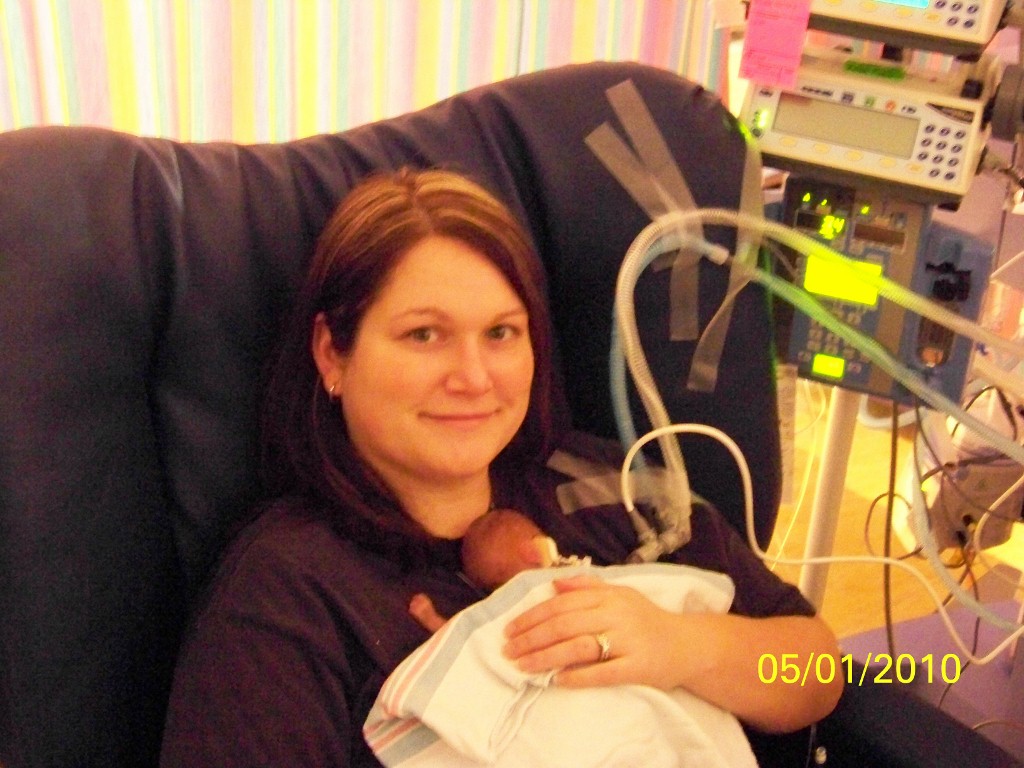 |
| Breanna holding William for the first time. |
My birth story starts almost exactly 3 years ago. Yesterday was the third anniversary of my son's death. I had a pretty typical twin pregnancy until my water broke at just 22 weeks. That night I was taken to the hospital and told I would not leave until my babies were born and they would try to hold that off as long as possible. I was told to even have a small chance we would need to make it to 23 weeks and 24-25 weeks to have a decent chance. Even if I did make it that far it didn't look good for my son William, his amniotic sac was the one that had broken and there was not much fluid left to help mature his lungs.
The next few days I just waited and talked to the never ending train of doctors that came in to talk to me about what my babies future could hold and honestly I don't remember any of it. The waiting continued until around 1AM on day 5, something didn't feel right. They discovered that I was ready to deliver my son William and I was rushed to labor and delivery. Just before 2AM my son William was born weighing 535g (1lb 3oz) at 22 weeks and 5 days gestation (barely). As soon as he was born he was rushed off to the NICU while the medical staff turned their attention to trying to stop my labor.
 |
| William, born at 22 weeks and 5 days |
The magnesium did it's job and I was turned on my side and tipped head down and the waiting started again. They also started the series of steroid shots to give John any chance they could. I spent the next 39 hours waiting and being very closely monitored while my husband brought me back pictures of my son William with news that he was very critical but stable!
The next evening the medical team decided that John needed to be delivered, he was slipping lower into the birth canal and there wasn't much else they could do. John came into the world at 5PM, 39 hours after his brother, also weighing 535g. He was also rushed off to the NICU.
 |
| John, born 39 hours after William now watches over his brother. |
This changed when John was 5 days old, we received a phone call early that morning that John was not doing well. When we made it to the hospital he was barely hanging on and there was nothing they could do. He had pneumonia with a very aggressive bacteria and by the time they realized something was wrong it was too late. That morning John passed away and has been watching over his older brother William every day since then.
 |
| William on his way home! |
Slowly but surely William started to grow and after a long 6 month NICU stay he came home! William is still on a feeding tube, has limited vision, and mild CP. He does not let this slow him down! William's entire NICU story as well as current updates can be found at www.maravytwinwatch.com.
 |
| Here's William now! |
Friday, July 20, 2012
 |
| Tony, one year. |
My birth story is a sad and scary one. I had no trouble getting pregnant, both times
conceiving in less than 2 months. But
keeping a fetus alive, proved to be a nearly impossible task for me. I had horrible morning sickness and fatigue
with my daughter. They overshadowed the
joy I felt expecting a new baby and left me feeling extremely guilty for not
enjoying her more during her albeit brief life when I delivered her, already
deceased, at 18 weeks gestation. I’ve
never known such darkness in my life.
Nothing brought me comfort.
Six weeks after delivering her, my second round of test
results were back with an almost certain cause for the late miscarriage, a
septate uterus, which had apparently corrected itself according to my MRI. So my perinatologist and OB/GYN gave me the
all-clear to attempt another pregnancy and assured me I would not experience
the same issues or be put on bed rest.
(I had asked about the bed rest because a close friend had spent several
months bed ridden with her first child.)
I was desperate to put the bad feelings behind me.
We started trying that night. I went back to work from maternity leave the
following day.
Nineteen days later, exactly two months after learning my
daughter was no longer alive inside me, I tested positive for a second
pregnancy. In sharp contrast to my first
pregnancy, I was terrified rather than elated.
Were we ready? How could I love
another baby as much as I loved my daughter?
What if this one died too? You
can’t replace a baby.
But I was happy to have a second chance. This time, I’d be a better mom.
Two weeks later, I hemorrhaged.
The on-call doctor didn’t seem to care that I was bleeding
and pregnant. “This happens
sometimes. Most of the time it is
implantation bleeding and does not cause a problem. But if it is a miscarriage, there is nothing
we can do about it,” she told me matter-of-factly, as if she were talking about
a lost book or something. I left her
office feeling helpless. But she had
prescribed pelvic rest, and that I could control. So I did my best to take it easy and wait for
the bleeding to stop.
When I followed up with my OB at my dating ultrasound the
following week, she reiterated the on-call doctor’s diagnosis and
recommendation and said to call if it happened again. It did the next day-- a week after the first
time-- and again a few days later. No
doctor seemed to care. My perinatologist
agreed with both OBs at our scheduled meeting a week later, after all, I was
only 7 weeks pregnant and miscarriages are common around that time. Three days later, it was like someone had
turned the faucet on…I bled for an hour, saturating pad after pad. The phone nurse seemed very nonchalant about
the bleeding when I called around 10:30 PM and asked me to make an ultrasound
appointment in the morning. When I
arrived, they rushed me to the perinatologist’s office for the ultrasound,
after which I was given the bad news: I had a subchorianic hemmhorage, and I
would be on strict bed rest from the time I arrived home until it healed, which
in most cases takes about 1-2 months time.
It didn’t heal.
At 13 weeks, I had been hemorrhaging less often than in my
early weeks of bed rest, so I was allowed to modify my bed rest to take the
stairs a couple times per day and take a reasonable shower. (On strict bed rest, I got 5 minutes, which
isn’t really long enough to do anything other than wash my long hair.) That Wednesday, I had the worst pain yet,
coming and going and squeezing my torso with immense strength. All I could do was scream from the pain. I called the OB because surely something was
different. My husband rushed me to the
clinic for an emergency ultrasound. The
technician was doing regular clinic hours that day, thank goodness, but she was
my high risk ultrasound technician usually.
She was surprised to see me and even more surprised by the shrieking I
was doing. (They wouldn’t even let me
sit in the lobby because I was scaring the other patients!) She had a nurse run to get the on-call doctor
shortly after beginning the exam.
This
could not be good.
The doctor did a quick pelvic exam upon arrival to the
small, dim room. All the healthcare
professionals stepped out of the room together afterward. My husband, our unborn baby, and I were alone
in the very scary ultrasound room—the same room that had brought us happiness
just seven weeks earlier at our dating ultrasound. When they returned, the OB said the words
etched in my memory, “Your placenta has abrupted. Your uterus is as hard as a rock. You will not be pregnant by the morning. I’m scheduling a D&C for tomorrow.”
“Like hell you are!”
I screamed, “His heartbeat is 156!
And I’m far enough I can labor through it, so that is what I’m going to
do. This is NOT my first miscarriage!”
“If we allow that, you will most likely bleed to death.”
“Well then, I guess I’m going to bleed to death because
you’re not taking my baby!”
“We’re not going to let that happen.” And the doctor excused himself to give us some
privacy to deal with the emotions. At
that moment, I stopped caring about the pain.
A strange calm washed over me as I resigned to bring my baby to life or
die trying. We called our pastor. And they admitted me to the hospital attached
to the clinic.
A few hours later, full of IVs and resignation, I was
approached by the same doctor. He
delivered the best news of the day, “There’s still hope.” My contractions had stopped, the bleeding had
eased, and the baby still had a strong heartbeat. When pastor arrived, we shared the good news
and prayed. I was released the following
day, prescribed strict bed rest until delivery.
As the weeks progressed, the hemorrhages happened less
frequently but more intensely. I would awaken
in a pool of my own blood some nights, so I began sleeping on a towel. We rushed to the ER several times as I
cramped violently and passed blood clots the size of my fist. When this would happen, I typically vomited,
became light-headed, and got to the floor as quickly as possible to avoid the
dangerous fall that would come if I lost consciousness. I cannot describe the terror I felt crawling
back to the toilet, plastic cooking spoon in hand (don’t worry, this was its
final purpose in our home) to scoop the clot out of the toilet and check for
gray fetal tissue. No one can ever get
used to that.
But things were looking up.
My perinatologist felt that by 19 weeks, I did not need to be seen every
week anymore. I dropped from weekly
ultrasounds to every 3 weeks because baby was growing and developing
nicely. When Viability Day came at 24
weeks, we celebrated with sparkling grape juice.
The morning of my 25 week appointment, I awoke in the early
morning as a large clot punched through my cervix. “I’ll be admitted today,” I told my husband
as I returned to bed. So he made
arrangements to take me to my afternoon ultrasound. We were in the perinatologist’s office all of
a minute after the ultrasound. We had
discussed this possibility before, so all he had to do was reiterate what was
happening.
My hospital room was clinical and lonely, but it was a
single room, something I’m eternally grateful for. I know that I could not have handled a happy
nursing mother bedding next to me; I could barely handle hearing the healthy
babies cry in the hallway. We had a
lovely nurse at check-in who made a deal with me, “As long as you stay
pregnant, you get cheesecake.” I was
once again hooked up to IVs and monitors, and I received a round of steroid
shots preparing for imminent delivery in the next few days.
Three weeks later, I was still pregnant and still in my
hospital room, the closest room to the OR.
By now, I had decorated and befriended many members of the hospital
staff. A “chain of love” in green, cream,
and pink (the only colors available on the craft cart for some reason)
festooned my walls, one link per day of bed rest so far and one link for each
day I hoped to stay pregnant. I looked
forward to my hot lunches, since I’d spent most of the last few months eating
peanut butter and jelly sandwiches and cereal.
Don’t get me wrong, I had plenty of days I was angry and did not want to
talk to the staff or visitors, but I did my best to stay positive. The pet therapy program helped a lot. I would get random visits from various dogs
during my stay. But I kept holding out
to meet the pony—that’s right, I said pony!
 |
| "...that's right, I said a pony!" |
Now at 28 weeks, I’d been complaining that the blood didn’t
seem like blood anymore, too clear and too constantly gushy. So my nurse did a test for my water being
broken. (I’d battled low fluid for a
long time, so no one was concerned before this.) Barely a minute into the test, which is
supposed to take several, she confirmed that I was leaking amniotic fluid
pretty heavily. So I got more IVs, more
steroids, and more scared.
Again, I avoided having the baby when everyone thought I
would. After a week, my perinatologist
let me have the IV ports out again until necessary and gave me the best news
I’d had in a while, “If you are still pregnant a week after your water breaks
without infection, there is a good chance you can make it to 34 weeks. That is as far as I will let you go, though
because at that point the potential detriment will outweigh the potential good
of staying pregnant.” So we continued.
Three weeks later, my husband brought me Olive Garden
takeout to celebrate our second anniversary.
I turned down my hospital dinner, including the cheesecake that was to
be my dessert. That night, I went to
sleep with some nasty indigestion and a loving husband kissing me goodnight and
heading home.
In the morning, I still had the indigestion when I woke up,
so I waddled to the bathroom. That
brought me no relief, so I called the nurse.
It was early, about 2 hours before shift change, so she got there fairly
quickly. “Let’s put you on the monitor,”
she suggested. After about an hour, she
came back to check on me and said she wasn’t concerned because she didn’t see
any contractions. But I felt worse, so I
asked if the on-call OB could stop by.
He had just finished a delivery, so he came in a little while
later. I stayed on the monitor while I
waited.
He had come to be one of my favorite on-calls because on
weekends, he would sometimes bring in his terrier, a spunky little pooch with a
skull-and-cross-bones scarf. I think the
dog was as excited to see me as I was him.
He did not have his dog with him that day, though; it was a
Tuesday. He put his hand on my belly and
watched the monitor. Soon I was crying
from the pain; then it eased. Again
crying, then eased. “You are having
contractions,” he said, “I don’t know why they are not registering on the
monitor.”
“Am I in labor, then?”
I asked. I had been texting my
husband since I woke with pain, and I needed to text him soon if I was in labor
because otherwise he would leave for work.
“It’s almost shift change.
I’ll let the next on-call check for labor. He should be here in a few minutes.”
I texted my husband who had already taken off work because
he was so concerned by my messages. He
was there before the next OB arrived.
Sure enough, when the next OB did a pelvic exam, I was 4 cm dilated and
90% effaced. “You’re in labor,” he said.
“Give me some drugs,” I said, “I’m having a cesarean because
baby is breech and want to be in as little pain as possible.”
He made me wait while he got an ultrasound machine to
double-check baby’s position. Yes, baby
was still frank breech, as if to stop my body’s numerous attempts to end the
pregnancy early.
Soon, I was shaved, prepped with IV ports, and briefed on
what would happen in surgery. My OB met
us in the OR. I was grateful for the
release from my bed prison, despite my concerns for my baby’s health and
well-being as a 31 week preemie. The
surgery went quickly. My husband almost
didn’t make it into the room in time for the actual birth.
My son, Tony’s
cries were the most beautiful sound I’d ever heard! Many preemies don’t cry right away because
their lungs aren’t fully developed, so I was a little surprised and extremely
grateful he came out crying. His weren’t
fully developed either, but the steroid shots helped to mature them as much as
possible. “Tony, be brave! I need you to be brave! I love you!” I called to him. He was attended to by a team of neonatal
specialists who showed him to me momentarily before whisking him away to the
NICU while my doctors stitched me up and sent me to post-op for a few hours.
 |
| Tony at birth with his new friend, Pooh. |
Waiting to see him was hard.
My husband followed him to the NICU and took some pictures until the
NICU staff asked him to leave the room while they intubated the baby. He came back to visit me and show me
pictures, answering all my questions about how he looked and smelled as well as
what was happening down the hall in the NICU.
Tony weighted a whopping 3 lbs. 11 oz. and was just shy of 16 inches
long. I did not get to visit him for an
eternity—ok, a couple of hours of post-op—and I when I did, I was wheeled to
the NICU still in my bed as the epidural wore off. He was beautiful! And he knew my touch.
I could only stay with him for a short time because he
needed his sleep, and I needed to pump.
While I was in between visits with Anthony, the pony came for pet
therapy, as if she’d waited to meet me, so she could celebrate with me.
Having a baby in the NICU was tough. After 6 months of bed rest, my muscles had
atrophied. Any mother who’s had a
cesarean can attest that the first few days are full of intense pain at the
surgery site, but I could barely walk 100 feet before the surgery. My nurses encouraged me to walk my wheelchair
down to the NICU to regain strength. I
would walk as far as I could and get a push the rest of the way.
I held Tony for the first time on his third day of
life. He was only on the ventilator for
2 days, which was the main reason we were not able to hold him the first 2
days. Holding him was incredible! But I cramped up really badly from the
oxytocin release and had to stop after only about 15 minutes. My husband held him that night.
Over the next six weeks, we had our share of ups and downs
but mostly positives. We tried
breastfeeding around two weeks old (33 weeks gestational age), which was a mix
of emotions. Tony knew exactly where his
mouth should go, I’ll always remember the sweet look on his face as he looked
up at me, mouth agape, as if to say, “I’ve got my mouth in the right spot;
where’s my milk?” Alas, he just could
not get enough suction. We had some help
from nurses and lactation consultants, but he just did not get the hang of
it. After about 2 weeks of trying, we
decided to try a bottle so that we could take him home when he got the hang of
eating. He did much better with the
synthetic nipple, though he was able to suckle my breast for a few minutes
before we left the NICU. He did not
successfully nurse without a nipple shield until he was 3.5 months old (1.5
months adjusted age).
He was put on CPAP after the ventilator for a few days
before going to a nasal cannula that stayed until he was 6 months old (4 months
adjusted age). He hated the tubes
attached to his face and would try to pull them off. He did this until the cannula came off. I hated having to put it on him.
He spent about two days under the phototherapy lights
because his bilirubin levels were too high.
He had an orangey color. And he
wore a little eye mask that made him look like a movie star tanning while he
was under the light. He was in an
isolette at the time to reduce the amount of stimuli around him to help him
sleep.
He had lots of tests to make sure he was healthy. He had ultrasounds on his head to check for
bleeding; thank God there was none!
Several times, the respiratory therapists tried to take him off oxygen,
but his blood oxygen levels always dropped.
And he had a chest ultrasound because of a heart murmur. His hearing test came back normal, and he
passed his car seat test.
Near the end of his NICU stay, he had an eye exam, which was
horrible! I was asked to leave the room
while the ophthalmologist did the exam because he cried so much. When I came back, Tony was limp and
unresponsive. He had had his
circumcision and the chest ultrasound that day as well. The neonatal team tried to assure me he was
just tired, but he was not acting like he normally did, even tired. This is probably my worst memory of the
NICU. I picked him up and held him while
the nurse jabbered at me about who knows what.
I was angry that he was so unresponsive—what had they done to my sweet
little boy?! “Please leave us,” I
implored the nurse. I held him close and
kissed him. When the doctors came in, I
was still pretty upset. They had
scheduled too much for my little guy.
And he would not eat, which was our last big hurdle before he came
home. I did not want this to set him
back. His feeding tube had been removed,
and now they were threatening to replace it for a few days. I was devastated and angry, so I told the
doctors why I was upset. They said that
they’d do what they could to make sure Tony could come home as soon as
possible. And the home health nurse
brought us our oxygen concentrator and taught us how to use it and our apnea
monitor.
The next day, we were able to room in with Tony. It was a long night, since the apnea monitor
we had received turned out to be faulty and false-alarmed numerous times
throughout the night. Within a few
hours, we had to disconnect it and use a hospital monitor because the alarms
were so frequent. My husband and I were
so scared every time. But otherwise, the
room-in went well, and we received a new monitor the next morning.
We stayed until early afternoon that day, a Saturday in
mid-August. We filled out our paperwork,
said farewell to the nurses, doctor, and other staff, and packed up all the
stuff we got to take home. It was
emotional taking him home for the first time.
We were happy to have him close to us but very scared to bring him home
in less than perfect health. The first
night, no one really slept in our house.
We were too nervous, and Tony was in the newborn phase, waking to eat
every few hours. But we eventually found
our groove and learned how to care for him calmly and rationally.
 |
| The chain of love around Tony's room. |
As a one year old, he is still behind on some things
developmentally, but he is happy and well-adjusted. He pulls himself to standing, communicates
his needs and wants, and loves to watch the monkeys at the zoo. He even blows raspberries on my legs, like I
do to his belly. This sends us both into
fits of laughter. And I don’t know that
I would change our story as awful as the memories are because I know I’d
appreciate him very differently without all the difficulty in getting him here. Our chain of love now bedecks his bedroom, a
daily reminder of how far we’ve come.
Thursday, November 17, 2011
I have 11 month old twins, Kimo Martin and Nicholas Rey. There were born on 12/25/10 (Christmas babies!!) when I was 31 weeks pregnant.
I have had 3 miscarriages and gave birth to my baby girl, Mary in 2009. She was born at 23 weeks and sadly passed away. One year later, we decided to try again and got the most wonderful news ever…we were expecting twins. Because of my history, my doctor took me out of work at 13 weeks and placed a cerclage. I was on bed rest at home and was only able to take very short showers and go to doctors appointments. At 23 weeks, I had my cervix checked as I had been doing every two weeks, and it was thinning out. The doctor decided to put me on COMPLETE hospital bed rest. Bed pan and all. It was very difficult because I had to lay in a flat position most of the time but I would have hung upside down for these boys. Within one week after being admitted to the hospital, my cervix was completely gone and we were told that they could come any time now. We were prepared for the worse but I didn’t think my heart could take anymore. But then...another week passed and the chances of survival increased slightly. Then another week and another. By 27 weeks, I breathed a little easier but still did my best to keep those boys in. By now, I had complete atrophy in my legs and could barely lift myself up to move in the bed. Two days before Christmas, the back labor started. I had never had major contractions so at first we thought the back pain was just from being in bed for so long. On Christmas day, I was feeling a little better and thought just one more month…we can do this! But then the labor started and my body just couldn’t take it anymore. I was terrified because I was still very early, but knew my boys would be ok.
Kimo Martin was born at 10:17 pm, 3 lbs 14 oz and 17 inches. Nicholas Rey was born at 10:19 pm, weighing 3 lbs 12 oz and 17 inches. They came out screaming, pink and perfect. They both had an agpar score of 8/9 and I was even able to touch them and kiss them. Then they were taken to the NICU. I was taken to recovery and saw them the next day. I couldn’t believe how perfect they were. Small yes…but perfect. They only needed to be on the CPAP and canula for the first couple days and from them on, it was just getting their weight up. The doctors called them the super twins. We were very fortunate that they did not have major health problems. Being in the NICU teaches you how fragile life really is and it’s the worse feeling to leave your babies night after night. We sadly saw many families get bad news and your heart hurts for them because we are like a family there.
 |
| A very drowsy Nick. |
 |
| Kimo + friend! |
My boys came home after being in the NICU for 6 weeks and are doing fantastic. They are active little boys and get into everything now. They actually aren’t so little anymore…..about 24 lbs each. I am so thankful that they are here and healthy.
 |
| Kimo + Nick now. |
My story is long and one filled with hope, happiness, and
devastation. It all began at 13 weeks when I found out we were expecting
identical twins during the NT scan. The doctor told me that the babies were
measuring a week apart – not something that was usually seen so early. He
showed me how Baby B’s umbilical placement was on the edge of the placenta
compared to Baby A’s placement in the center. At that appointment I first
learned about twin-to-twin transfusion syndrome (TTTS).
Pulmonary vein stenosis is a rare and serious condition in which there is an obstruction (blockage) in the blood vessels that bring oxygen-rich blood from the lungs back to the heart. It can be isolated to a single pulmonary vein, but most often occurs in multiple veins simultaneously.
The stenosis occurs due to an abnormal thickening and, thus, narrowing of the walls of the veins. Pulmonary vein stenosis frequently progresses. As a result, partial loss or even total obstruction of flow to a vessel or vessels may occur.
Surgery to widen the narrowed veins and catheterization to stretch the vessel are usually short-term solutions since the obstruction typically recurs within a month to six weeks. (source, Children’s Hospital Boston)
I immediately went online and reached out to the multiples
community; I was so overwhelmed and excited! Very quickly I learned that I
needed to be monitored closely. My doctor, though, had other ideas and didn’t
think I would need further monitoring and so wouldn’t schedule an ultrasound
until 20 weeks. But based on everything I was reading, that could possibly be
too late. In advance of my upcoming 16 week appointment, I called every single
perinatal doctor in my area; none would take a patient as a self-referral. One
finally did, and I made my appointment for the day following my 16w checkup. I
told the doctor about it, that my gut said something wasn’t right; she told me
I needed to relax and that an ultrasound at 16 weeks wouldn’t tell us anything.
I went to the appointment anyway.
At 16 weeks, my babies were measuring 3 weeks apart. They
immediately referred me to the TTTS specialists in Baltimore at the Center for
Advanced Fetal Care, the closest location to us. And thankfully this location
is only an hour from us. All my hopes and excitement about the pregnancy came
crashing to an abrupt end. I was terrified and devastated. I had to ban my
internet time for the weekend because reading the stories of TTTS survivors and
victims just ripped my heart out.
For the next 3 weeks I was monitored weekly in Baltimore by
the TTTS doctors. They determined that I did not have TTTS but rather severe,
selective IUGR in Baby B. I had none of the factors of TTTS (we had visible
bladders, the amniotic fluid was in normal ranges, etc). We also determined
over those appointments that Baby B’s umbilical cord had sporadic absent flow.
We learned that the flow could easily become a reversed flow. If that happened,
if we were at a viable point, we would
have to deliver immediately. We learned that if Baby B were to die in utero, a
distinct possibility, that we would have to deliver; because the babies shared
a placenta and so shared blood flow, if one of the babies died, then Baby A
could die or suffer severe neurological damage. We learned about umbilical cord
ligation: a laser surgery that would basically clamp baby B’s cord, killing
him, but ensuring the survival of Baby A. We learned about the laser surgery
for TTTS, but I didn’t have TTTS and so wouldn’t qualify.
At 20 weeks my regular care was transferred to the high risk
doctors in my local area. My first appointment with them was the standard 20
week scan. The benefit of having all the ultrasounds from week 16 on is that we
knew the baseline growth measurements for both babies. At 20 weeks, Baby B
didn’t grow at all. My local doctors immediately suggested the ligation
surgery. We were devastated. On the ultrasounds, little Baby B looked healthy;
he was just as active as his brother, just half the size. Two days later we
went back to Baltimore to get their opinions. We were given several options. We
chose the wait and see approach. The doctors there felt that because Baby B was
so small, if he did die in utero, the chances that Baby A would be affected
were minimal. We decided that Baby B’s fate was up to him – we wanted to give
him a chance.
The next week Baby B grew 19%. We were stunned! And at that
time we decided that we’d always give Baby B a chance. We kept having weekly
appointments, alternating between the doctors in Baltimore and the local high
risk doctors. I always felt like our local doctors thought we were making the
wrong decision; the Baltimore doctors never made me feel that way.
At 25 weeks, the local doctors admitted me to the hospital
for monitoring. There I received ultrasounds and Doppler studies twice a day; I
was the first one each morning and the last one each day. On the fourth day, we
were told that Baby B was in imminent danger and that we needed to deliver. But
we requested that our doctors contact Baltimore and see if they agreed. They
didn’t. I went in for another ultrasound, and the local doctors looked for
specific Doppler numbers; everything was in MY normal range. Not normal by any
other means, but normal for my case. I requested that I check out of the
hospital immediately. The stress they were causing each day was not good for me
or the babies. We arranged a plan where I’d return for twice weekly
monitoring. I returned twice more to the
doctors in Baltimore. At the last appointment, based on just the report
numbers, the doctor was confident that I would make it to 30 weeks. As we were
talking and planning the next several weeks, he decided he wanted to scan me
himself. He did, then stopped, and said that if the local high risk doctors
decided that I needed to deliver, he wouldn’t stop them again. We asked what
changed, but he couldn’t point to anything, just his gut instinct.
Two days later at my local appointment we saw that Baby B’s
Doppler showed reverse blood flow. Surprisingly, my husband and I argued. Could
we wait longer? What are our options? We finally decided that we’d played poker
with the babies long enough; keeping Baby B inside any longer was getting more
and more dangerous. It would be up to him now.
So a few hours later, I found myself up in surgery, at 27
weeks exactly.
Baby A was delivered, and we heard a cry. Sebastien was born
at 2lb 1oz. Baby B was delivered, and we heard silence. Samuel was born at 12
ounces. My doctor came over and said he was sorry about “the little one.” I
couldn’t tell what was happening. My husband was next to Sebastien, trying to
watch what was happening with Samuel. I heard alarms; my husband came back to
my side. The room was chaos. The neonatologist came over and said she’d done
everything she could for Samuel, asked if we wanted to say goodbye. She brought
him to us wrapped in a blanket. He was beautiful; he was tiny; I loved him so
much. My husband held him, I stroked his head, leaned over to kiss him, talked
to him. I told him I loved him, but it wasn’t his time. Please Sam. He moved. And he moved again. My husband and
I both gasped. My husband placed his finger on Sam’s chest; he could feel a
pulse. He called a nurse over, told her that he was moving, that there was a
pulse. The nurse said it was all reflex. But no, our baby was alive. My husband
took Sam over to the NICU team, asked them to please, please look at our baby
again. They did, but the entire time, many of the team was shaking their heads.
They gave Sam another dose of epinephrine. His heartbeat stabilized; they were
able to put a ventilator tube down his throat.
My husband followed the boys down to the NICU while I was
closed up and moved to recovery. I was told I couldn’t go see them until I
could sit fully upright without being sick. I remember being in recovery and
forcing my toes to move, forcing myself to try getting moving. In my hospital
room, I kept trying. Hours later I was finally able to be wheeled down.  |
| Sam after birth. |
 |
| Sebastien after birth. |
 |
| Cradling Sam. |
 |
| Cradling Sebastien. |
No matter how much you prepare, even having toured the NICU
and knowing what things would look like. Nothing can prepare you. We visited
Sebastien first. He was so tiny! He was doing well though and only on CPAP and
under the bili lights. I learned that I wouldn’t be able to hold him until his
umbilical line was removed. I learned about cradling, how to touch our delicate
babies. We then went to see Samuel He was teeny. His head was the size of a
racquetball. His body reminded me of a Barbie doll. Sam was on the high
frequency oscillator since that vent is much more gentle on the lungs. I was
afraid to touch him; but I found courage and gently placed my hands around him.
Sidenote: Months later we found out that the NICU had only
prepared one spot, only prepared tags for Baby A. They were told to only expect
one baby. I was horrified when I heard this, and so we asked around. Sam’s
nurse confirmed it; he was in the delivery room and when Sam wasn’t responding
he was sent back down. When Sam came down, the nurses, the staff stood in awe,
and then quickly got his paperwork completed.


Later that evening, the neonatologist on duty came to my
hospital room. She apologized and said she’d followed all guidance from the
preemie care standards (can’t remember the name of this). I told her that
nothing about my case had been clinical, that nothing had been standard or
normal. To please not treat Sam as a normal case, that if something wasn’t
working, to try something else, to please just give him a chance.
 |
| A favorite picture of Sam. |
 |
| Sam on CPAP |
 |
| Sam sleeping. |
The next months passed in a blur. We joked that Sebastien
was on cruise control. He only got sick once, an infection that antibiotics
wiped out; he was intubated for a day and a half during this. He does still
have a large PDA, but he shows no signs of any issues. We see the cardiologist
every 3 months to check its status. Will it have to be surgically closed one day?
We’ll see.
 |
| Sebastien and mom kangaroo together. |
 |
| Sebastien checks in on Sam. |
 |
| Sebastien takes a nap. |
Samuel’s journey was anything but cruise control. During his
first three weeks of life, he tripled his body weight! The poor baby was
literally starving in utero and was finally able to get the nutrition he
needed. He was on the oscillator for 6 weeks; the vent for 4. I was able to
hold him for the first time at 10 weeks. 10 weeks!!! He too had a PDA, and ASD,
and a VSD in his heart. We knew that the ASD would have to be closed at some
point, when he reached at least 10 pounds. We were smooth sailing finally, for
him anyway, and then he developed NEC. This happened within 24 hours of HMF
being added to his breastmilk. Was that the cause, we’ll never know. Rigorous
antibiotics treated him and we moved on again. Until he reached a certain point
with feeds and he’d get sick again. At that point we discussed doing
exploratory bowel surgery. I was nervous but wanted it; I want to fix what’s
wrong and move forward. But the neos, the surgeon, and the anesthesiologist
were not in agreement. So we got him well again and started over. This cycle
happened 3 times, each time he’d get sick when he reached a certain point.
During this time he had laser surgery for ROP, he bounced between the vent, the
cannula, and CPAP. Around the third time he got sick, he had another
echocardiogram. We learned he had something called pulmonary vein stenosis
(PVS). This was a devastating diagnosis as it’s incredibly rare and there’s no
real treatment.
Pulmonary vein stenosis is a rare and serious condition in which there is an obstruction (blockage) in the blood vessels that bring oxygen-rich blood from the lungs back to the heart. It can be isolated to a single pulmonary vein, but most often occurs in multiple veins simultaneously.
The stenosis occurs due to an abnormal thickening and, thus, narrowing of the walls of the veins. Pulmonary vein stenosis frequently progresses. As a result, partial loss or even total obstruction of flow to a vessel or vessels may occur.
Surgery to widen the narrowed veins and catheterization to stretch the vessel are usually short-term solutions since the obstruction typically recurs within a month to six weeks. (source, Children’s Hospital Boston)
We found very little information to research on this, only
that Children’s Hospital in Boston is really the only location doing major
research. Their current research involves chemotherapy drugs. That was just
horrific to me as I couldn’t imagine my Sam undergoing chemotherapy. We questioned why and how he could do so well
with this condition. We were told that frequently babies will do well, but when
their hearts give out, “they go fast.” To make matters worse, Sam also had
pulmonary hypertension. We asked our doctors to contact Boston, to find
out more information.
At this time, Sam went back on the vent. Our hospital has a
policy that vented babies cannot be held as the risk of extubation is too high. With our diagnosis, I didn’t care. I
knew our time could be limited; I was going to hold my baby damnit, so figure
it out. We’d been there with Sam for 4 months now, so the nurses knew me, knew
I understood the risks, knew how to handle the situation. Getting him out and
transferred to me was a complicated dance that involved two nurses and a
respiratory therapist, but it was possible.
In the meantime we knew we needed to fix Sam’s belly. We
couldn’t grow him big enough for the various surgeries he needed if we couldn’t
feed him. Being on the IV nutrition was wreaking havoc on his liver (he was on
an experimental drug called Omegaven to help with this). We were finally at a point where all doctors
agreed, that to move forward we had to go in and see what was happening with
his belly. Waiting during that surgery was tense. But it was a success. When
his intestines were healing from the NEC, they fused together at two points. A
small enough passage way was there for food to pass, but not much. So once more
food was introduced, everything got backed up. We knew the recovery from
surgery would be rough, and it was. Each time they’d try to wean his pain meds was
a failure. I hated that my baby needed morphine and other pain meds.
The Sunday before he passed was one of the good visits. He
was alert and responsive to us. The very next day, on Monday, he seemed off,
not responsive, not doing well. That
evening we got the phone call. Sam wasn’t responding, they couldn’t keep his
oxygen saturation up. They called in the cardiologist to do an echo. We could
just tell that his heart was enlarged, that it was working incredibly hard, yet
it couldn’t pump blood. We were told that they could try a medication, that
we’d know soon after whether it was working. We were told about chest tubes,
etc. But we knew. At that point, he was being bagged because the vent wasn’t
working for him anymore; they started chest compressions. We told them to stop.
Sam was unhooked from everything and brought to us in a
room. I was able to hold him in his final moments. I felt him take his last
breaths. We held him, sang to him, read him his favorite book, kissed him. And
finally said goodbye. Our nurse was crying; the neo was shaking.
 |
| Sam's memorial garden. |
At five months and one day, we lost our son Sam. He was an
amazing baby, overcame more than some adults ever have to overcome. He found a
hard battle.
I’m leaving out so much with Sam’s story. It’s just so hard
to know what to say about it, what to include, what to leave out. The full
journey is detailed on the blog. As we’re coming up on a year of everything,
I’m doing a retrospective on it, including some details that were previously
left out, including my thoughts from a year later.
 |
| Sebastien today! |
 |
| Footprint comparison. |
Wednesday, November 16, 2011
Some stories are better told in segments. You can read the story of Gracie and her guardian-angel-twin brother Max here. Their story begins to unfold in the entries starting on 4 August.
Grace is 106 days old today - she is thriving and doing well at her NICU in Maine. Their home is ready and waiting her arrival in Massachusetts.


Grace is 106 days old today - she is thriving and doing well at her NICU in Maine. Their home is ready and waiting her arrival in Massachusetts.


Subscribe to:
Posts (Atom)
Popular Posts
-
For Part 1 of this series, click here HOW IS GER DIAGNOSED? If your infant or child has any of the above symptoms and you are co...
-
 I am a NICU mom, a twin mom, and an AMA mom. (that last one is Advanced Maternal age). I was 39 when I was blessed with my twin pr...
 -
...but we wish it did! All of us have heard comments like, "Well, s/he's home now - isn't it great to have life back to normal?...
-
 Here are some preemie mom thoughts – if you have something to add please leave it in the comments. NICU nurses often lurk on preemie pages t...
 -
 Picture from http://www.nhlbi.nih.gov/health/health-topics/topics/pda/ A Patent Ductus Arteriosus or other wise known as a P...
Preemie Mom Blogs
-
This feed has moved and will be deleted soon. Please update your subscription now.
-
-
-
-
-
-
-
-
-
-
-
-
-
-
-


Subscribe To


 Posts
All Comments
Posts
All Comments