Friday, September 14, 2012

Nora's story started back in May of 2010. We knew that it would take some time to get pregnant since I have PCOS, so Todd and I tried to get pregnant for almost a year and a half using fertility pills. After an entire year we decided to take a break over the summer, and low and behold on September 9th 2011 we found out that we were pregnant! My due date was May 14th 2012. I was extremely sick for the first 17weeks and after that I felt great and was able to finally start enjoying my pregnancy, that was until week 25.
On February 1st, I woke up for a routine doctor visit that was scheduled for 10:30am for my glucose test. Nora was 25weeks 2days gestation. As I was getting ready that morning I started noticing some slight cramping, I didn't think much of it and kept getting ready. As I got in the car the cramps were getting a bit worse but I thought maybe they were braxton hicks. I called Todd told him what I was feeling, told him I would run it by the OB but I was sure everything was fine and she would tell me it was all normal. In the Dr appointment I told her, "ya know the only reason I am saying anything is because they are happening like every 15-20min." So she checked me and said, that my cervix was softening but was not dilated. So she sent me home, told me to take it easy, drink lots of water, put my feet up and call her if I have more than 6-8 "cramps" in an hour. Well I went home, and in the first hour I had 8... I totally tried to downplay them. I was in such denial and terrified all at the same time. I thought if I ignored them, surely they would go away. I was on the phone for most of that hour with Todd, I told him I had had 8, but 2 I could barely feel so we wouldn't count those <--- idiot! Thank God Todd knew better, he left work, told me to call the hospital and tell them we would be coming into triage.

By the time we had arrived in triage and I was checked it was 2:30pm and I was already 2cm dilated!! WHAT??? I am pretty sure I went into panic mode at that point. The Dr told me I had a slight UTI, he would put me on antibiotics for that, jack me up on Magnesium sulfate (worst crap ever!) and send me to the special care unit. They did an ultra sound to make sure she was head down, which she was, and to check her weight. They predicted her at being 1lb 14oz. I could not even fathom what 1lb 14oz's looked like...I mean seriously...a 1lb baby?? This is where my memory gets fuzzy and I have to rely on what my husband tells me happened. At 6pm I got my first steroid shot for Nora's lungs followed by my first dose of Mag. When they gave me the mag it made me sooo sick and it caused me to basically black out. The mag is a huge muscle relaxer, so I couldn't move my arms, my legs, I couldn't even barely lift my head. Poor Todd, every time I had to puke he had to run over and completely sit me up. The nurses told Todd that they had never seen someone react to mag as badly as I did. They planned on giving me the first steroid shot at 6pm that night and then the second at 6pm the next night, then they realized they didn't have that kind of time, so it turned into 6pm and 6am, then they realized they didn't even think they had that time, so i got the first one at 6pm and the second one at 3am... I am no doctor but I know that it was ultimately God, but also those shots that saved Nora's life. I know I complain about the mag and how much it sucked, but it kept Nora in long enough to get the shots, and let them be in my system for a while to actually start to work. I know they tried all through that night to stop my contractions but to no avail. At 3:30am I was wheeled into labor and delivery and they started making preparations for delivery, even ordering my epidural (which I never received that night). At around 6:40am Todd sent out a desperate plea for prayers on Facebook, and by 8:30am my contractions had finally stopped, and I was 3-4cm dilated! They told me then that I would be on hospital bedrest until Nora was delivered and that they would do everything they could to stop it, but she would most likely be here within 7days.
Over the next few days, we had consults with a MFM (maternal fetal medicine), and with one of the Doctors from the NICU. They were trying to prepare us for what to expect with the birth of a 25weeker. Let me tell you, those are the scariest conversations I have ever had, and thankfully I don't remember most of them because of the mag. Apparently I straight fell asleep in the middle of one conversation I had with my MFM. The nurses thought it was hilarious that the doctor put in my chart "patient fell asleep, continued conversation with her husband." haha like I said...the mag and I did not get along! But I do remember praying to God saying, I will lay in this bed for the next 15 weeks...just please don't let her come early,please!! God had other plans though...
Two days later on February 4th, they decided that I was finally stable enough to wheel back out of labor and delivery and back to the special care unit. They wheeled me out at noon, and at 12:10pm my contractions started again. This time they were not able to stop them. I labored, panicked, terrified, and sick to my stomach for hours. They jacked me back up on more mag then I was on the previous few days and told me to try my best to relax...right. Todd's family was there, but all I wanted was my Mom and/or sisters, who were all at my other sister's baby shower. The nurses kept asking me if the contractions were strong and I kept telling them no, I thought if I told them how bad they really hurt that they would give up on trying to stop my labor. Because Nora was so small they couldn't even track most of my contractions on the monitor. How they knew I was having a contraction (with out me telling them) was because Nora's heart rate would dip with every contraction. Todd could see it all over my face every time I had a contraction, but I don't think he quite understand my insane logic of thinking at the time. He kept saying, Renee I know their getting stronger, you can no longer talk through them. I just really remember thinking, if I can keep lying about how strong these contractions are, they will keep trying to stop my labor. Finally around 5pm my Mom got there, and around 6:30 my water broke and they finally told me they were not going to be able to stop it this time, I was dilating way to fast. I absolutely broke down... I lost it. I was terrified for Nora, terrified that she would not make it. They started preparing me, telling me that she would not cry when she was born, she would not be placed on my chest, that I would not see her when she was born, and they would be rushing her to the NICU right after birth. I was supposed to have a joyful birth, full of fun, excitement, and anticipation. Not one of fear, terror, and horror-stricken panic. Around 7pm they finally turned the mag off, in hopes that I would be able to start to feel my legs and arms, and be able to lift my head for delivery. As soon as they turned the mag off, my labor progressed rapidly. By 8pm I was 6-7cm dilated and had just gotten my epidural in a last ditch effort to stop them. By 9:50 I was 8cm and by 9:55 I was 10 and ready to go! I have never in my life been more scared than I was in that moment. I remember just crying in shear desperation, just begging and pleading that she stay in, I kept repeating over and over again...its too soon...she's to small!
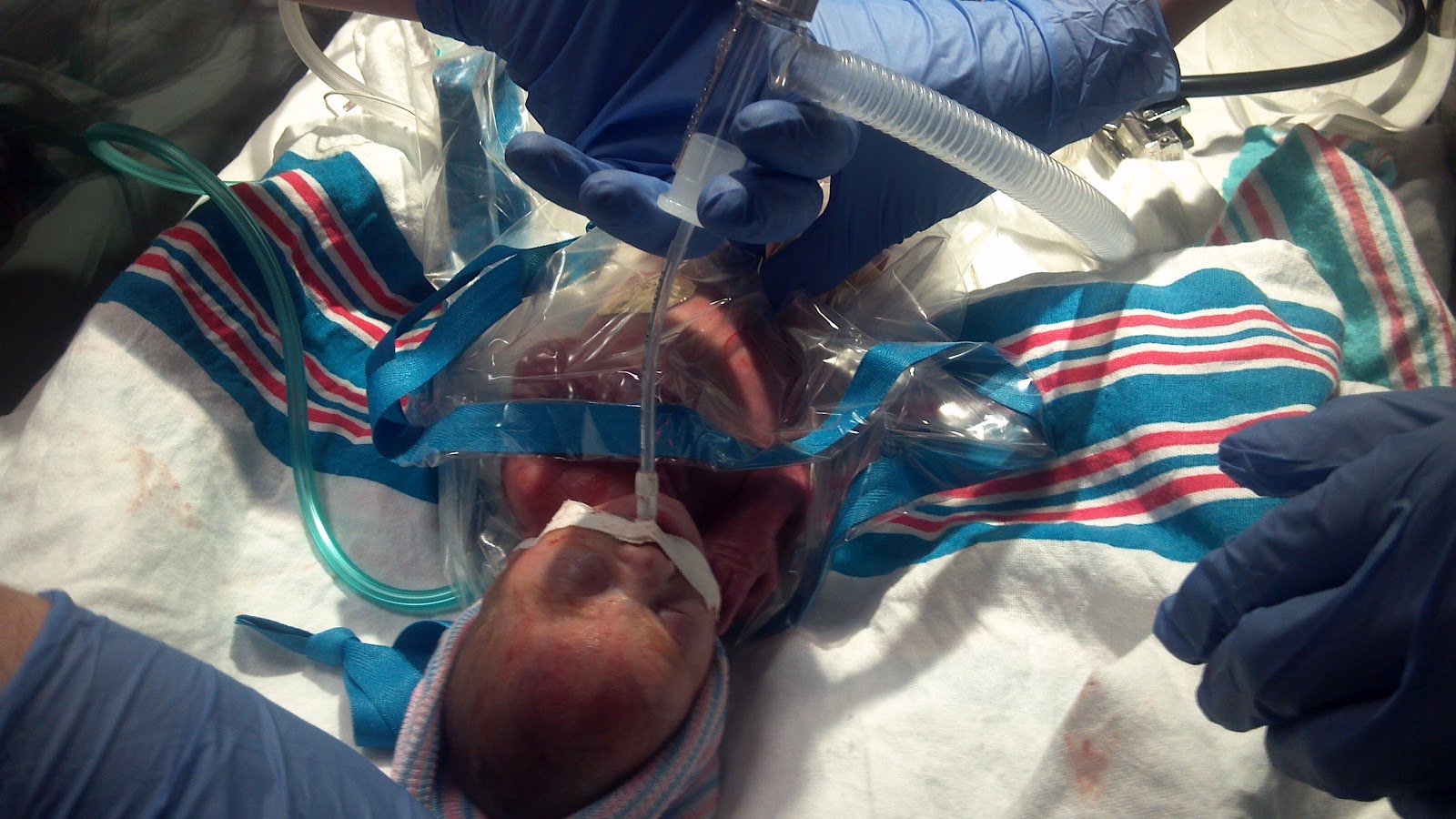
By 10pm my entire labor and delivery room was full of 10 NICU staff (nurses, Nurse practitioners, neonatologist, and respiratory) and then 5 more labor and delivery nurses and a doctor. You could barely move in that room there were so many people. With me was Todd and my Mom. I needed my Mom in there so that Todd could leave if he was able to be with Nora and she could stay and comfort me. After just 2 short pushes, Nora Katherine was born at 10:38pm weighing only 1lb 14oz and 13in long. When the doctor held her up for a split second for me to see, I lost it again. She was tiny and pink but did not cry at all. I knew she was going to be small, I knew she was going to be beyond small, but you can never begin to prepare yourself for that. I had no idea how something so small could ever survive. She took my breath away and I began to pray like I have never prayed in my life. I must say though, she was tiny, but she was perfect. Todd stood by my side, listening to everyone working on his precious daughter. They intubated her right away in my room and tried to get her as stable as possible. All I remember Todd saying over and over was, "they said she took a breath...they said she is breathing, babe she is breathing...shes breathing" I knew it was all machine/vent breathing but I just kept thanking God that she was alive. They worked on her for about 20min before they put her in her isolate, wheeled her next to me so I could get one good look at her, and then they rushed her to the NICU.

Todd was able to see her an hour later, and I was able to finally see her at 1am after my epidural had worn off. She was the most beautiful thing I had ever seen. She gripped right onto my finger, opened her eyes and looked right at me. That paired with the first time I got to hold her were some of the best moments of my life.
We didn't know until months later how critical her first 12hours of life were. The neonatologist told us there were several times they did not think she would make it, and every time I think about that I cry. Nora was born with an infection called Chorio, also within the first few hours of life she had a blood transfusion (within 6hrs of being born) and developed a bilateral grade 4 brain bleed (the most severe brain bleed you can have, that we would find out about 10days later).

They are still not positive on why I went into labor so very early, it could be a number of things, or just 1 individual thing, but unfortunately there is no way for us to know. I have a bicornuate uterus which can sometimes cause pre-term labor, but I came into the hospital with a UTI and Nora was ultimately born because of a sever infection in my uterus. There is no way to know if the UTI started everything, which then would have caused me to go into labor, and then being dilated caused the infection, or if the infection came first, if the bicornuate uterus caused the pre term labor etc... We were told that when a women goes into labor early, if caught very early, a lot of times the doctors can stop it, but when there is an infection the drugs will not work, and the baby knows its uninhabitable and it has to get out. Which is exactly what Nora did, and I thank God everyday that she did, less she could never have survived in there with the infection.
What she has been able to overcome is nothing short of a miracle. Everything that happened on those horrific scary days is nothing short of a miracle. The fact that I had a Dr appointment on the day my contractions started, (I would never have gone in because i didn't think they were contractions), is a miracle. The fact that they were able to stop my labor if even for a few days, so that the steroids could take effect is a miracle. The fact that Nora was born alive, even though her blood count was severely low, she was not breathing, she was magged out, and had a potentially fatal infection.... an absolute miracle. The fact that Nora had a bilateral grade 4 brain bleed... that could not be identified just a few short weeks later... miracle. The fact that she would later overcome 2 more potentially fatal infections...miracle. The fact that Nora is a happy, healthy 7month old right now.... MIRACLE!!! I would never have imagined the very worst, most terrifying day of my life, would also turn out to be one of the best... I can't imagine having a worse start to your life, but she is a fighter and she is our little miracle. We thank God everyday for her. Todd and I are forever grateful of all the miracles God has performed in our lives and especially with our sweet baby girl. My life changed the moment I had her, in ways I never ever imagined. I walked into that hospital on Feb 1st one person, and back out May 10th a completely different person. Nora has taught us more in the first 5months of her life so far, then she will ever know. I could not be more proud and in love with my little miracle.
Saturday, September 8, 2012
September is Hydrocephalus
awareness month. It is estimated that 1
to 2 of every 1000 babies are born with Hydrocephalus. This statistic makes it as common as Down Syndrome, yet it is a condition that is largely overlooked in terms of federal
funding for research. Shockingly, we
have seen little to no improvements in the treatment and diagnosis of
Hydrocephalus in the last 50 years. This
is a problem, especially when many cases of Normal Pressure Hydrocephalus
occurring in older adults are misdiagnosed as dementia.
In short, Hydrocephalus is the
build-up of cerebrospinal fluid in the ventricles of the brain. It can be congenital or acquired. This build up of fluid causes extreme
pressure on the brain, resulting in damage.
There is no cure for this condition, and the treatment, in the form of a
shunt, is far from perfect. 50% of
shunts will fail within the first year.
Babies who are born with or who acquire Hydrocephalus have a high risk
of developing Cerebral Palsy, since they are in the fragile stages of brain
development. Adults who acquire this
condition often need months of therapy just to get back to doing normal, everyday
tasks.
This is our story. Aiden & Ryan were born at 25 weeks
gestation. They both developed Grade 1
& 2 IVH’s or brain bleeds in their first week of life. When the bleeds weren’t resolving, the
doctors briefly mentioned Hydrocephalus.
Eventually, both boys had developed Grade 3 & 4 (the most severe)
bleeds on both sides of their brain. At
this point their head circumference was being measured daily. Any big jump in size would be an indicator of
Hydrocephalus.
Ryan was diagnosed first. One of his nurses noticed a 1cm jump in head
circumference overnight. As a matter of
fact, you could see with your own two eyes that his head was disproportionately
large for his body. After a few
consultations with the Neurosurgeon and a head ultrasound, he was officially
diagnosed. The best form of treatment is
a shunt, but he was still too small for one.
He was exactly one month old when they placed a tapping reservoir into
his brain. This allowed for the doctors
to drain the fluid every other day, without risking infection each time. Ryan got tapped every other day for the next
month or so, until he grew big enough for his shunt. It’s amazing how much the pressure on his
brain affected him on the days that he wasn’t tapped. He required more oxygen and had more episodes
of apnea when the fluid built up. By the
time he was ready for his shunt, we were anxious to get it done. We just wanted him to get better. As we expected, a few days after surgery,
Ryan no longer required oxygen. He was
on the fast track home.
Around the same time, Aiden was
also being monitored for Hydrocephalus.
We thought he wouldn’t be diagnosed, but he eventually was. For some reason this put my mind at ease for
Ryan. This may be a little warped, but my
thinking was that at least they would go through this together. I guess it’s a weird way to look at it. Aiden got his shunt a couple weeks after
Ryan. He didn’t respond as quickly in
terms of oxygen needs, but his lungs were much sicker. His Hydrocephalus also isn’t as severe as
Ryan’s, so he might not have been as affected by it. Though we did notice a drop in his resting
heart rate after the shunt was placed.
We spent the next few weeks trying
to get our boys out of the NICU. They
had a lot of struggles with learning how to eat using a bottle. A lot of the doctors and nurses thought it
was because of their condition. As a
result, they wanted to send the boys to feeding rehab for however long it took
them to learn how to eat. One doctor
even suggested putting Aiden on a g-tube, because with his cleft and the
Hydrocephalus, she never thought he would learn how to use a bottle. By the time the boys were accepted into the
rehab facility, they were getting the hang of bottle feeding. And they truly surprised everyone.
Upon discharge from the NICU, Aiden
& Ryan had an MRI scan of their brain.
We had an appointment with their neurosurgeon to discuss the findings. In short, we were told to expect some form of
CP, and that Ryan would need more intervention than Aiden, because the volume
loss (or damage) of his brain was much more significant. In truth, though, no one can tell us what the
future holds for our boys. They
currently receive services through Early Intervention, and our hope is that one
day they will be able to live independently.
I recently read a statistic that said 60% of children with Hydrocephalus
will NOT go on to live independently.
The odds are stacked against us. But
so were the odds of their survival. And
they beat that. So who knows what will
happen.
Although the boys are struggling with
some significant delays at this point, our lives are pretty normal. Our main concern is getting the services they
need in order to hit their milestones. We
also have to keep an eye out for shunt malfunction. The signs of malfunction are vomiting, irritability,
sunset eyes (baby looks down all the time), abnormal head growth, lethargy, or
decrease in appetite. So you can imagine
that even a simple stomach bug can be confusing to us, especially with a child
that can’t speak yet. Other than that we
are a happy family. We spend time
together, laugh, cry, rejoice in the smallest of milestones. And we do our best to raise awareness of this
condition that has touched our lives.
For more information on
Hydrocephalus, please visit http://hydroassoc.org
To follow Aiden & Ryan’s story,
please visit http://hydrobabies.blogspot.com
.
Monday, August 20, 2012
Premature Rupture of Membranes (PROM) and
Preterm Premature Rupture of Membranes (pPROM)
 Premature rupture of membranes (PROM) refers
to a woman who is beyond 37 weeks' gestation and has presented with rupture of
membranes prior to the onset of labor. Rupture of membranes is more commonly
referred to as “water broke” or “broken sac”. Preterm premature rupture of membranes pPPROM) is a repture
of membranes prior to 37 weeks' gestation. pPROM
is associated with 30-40% of preterm deliveries and is the leading identifiable
cause of preterm delivery. pPROM
complicates 3% of all pregnancies and occurs in approximately 150,000
pregnancies yearly in the United States.[1]
Premature rupture of membranes (PROM) refers
to a woman who is beyond 37 weeks' gestation and has presented with rupture of
membranes prior to the onset of labor. Rupture of membranes is more commonly
referred to as “water broke” or “broken sac”. Preterm premature rupture of membranes pPPROM) is a repture
of membranes prior to 37 weeks' gestation. pPROM
is associated with 30-40% of preterm deliveries and is the leading identifiable
cause of preterm delivery. pPROM
complicates 3% of all pregnancies and occurs in approximately 150,000
pregnancies yearly in the United States.[1][2]
Causes
pPROM is a bit more difficult to pinpoint causes, however it is likely due to the same mechanisms and premature activation of these pathways. However, pPROM appears to be linked to underlying pathologic processes as well, most likely due to inflammation and/or infection of the membranes. Clinical factors associated with pPROM include low socioeconomic status, low body mass index, tobacco use, preterm labor history, urinary tract infection, vaginal bleeding at any time in pregnancy, cerclage, and amniocentesis. [3]
I was laying in bed while I was 25 weeks
pregnant with boy/girl twins, watching the evening news, when I felt wet “down
there”. I literally started
giggling as I thought to myself, “I’m only 25 weeks pregnant and I’m already
peeing my pants!” I got out of
bed, took my yoga pants off, and noticed it was a little more than the dribble
I felt. I walked to the bathroom
where I sat on the toilet, stood up, and a huge WOOSH of water came out. I knew right then and there that it
wasn’t urine, it was fluid, and that my water had broke. I called my OB and she told me to put a
pad on and get to the hospital. I
told them that at this point we were beyond a pad, hung up the phone, stuck a
towel between my legs, and headed to the hospital where they confirmed almost
immediately via an AmnioSense strip test that it was amniotic fluid. Looking back, I believe bleeding from a
subchorionic hemorrhage or hematoma present with
Baby A from weeks 9 until 17 deteriorated her sac and caused my pPROM.
Treatment and Risks
Unfortunately, there is no
treatment for PROM or pPROM. With
PROM doctors feel that, in the majority of cases, it is safer for both the
mother and baby to induce labor and deliver early. However, some doctors may choose to put a mother on hospital
bedrest and a non-stress test (NST) given daily to monitor the baby and ensure
there is no distress. Antibiotics
are likely to be administered to ward off infection. There remain different schools of thought, but PROM mothers
are likely to face immediate delivery.
The course of action for pPROM is significantly
different. Mothers are put on strict
hospital bed rest with constant monitoring unless there are other significant
risks to the mother and / or baby to consider including fetal distress. In those cases, immediate delivery is
suggested. The hope is to stop /
prevent labor and stave off infection for as long as possible with the goal to keep
the baby in for as long as possible until it is safer outside than inside. Since amniotic fluid is essentially
baby urine, a baby can last quite some time in a broken sac as long as
infection stays away. Magnesium sulfate is often given to stop labor and corticosteroid shots (ex. betamethasone) to help accelerate the development of the baby’s lungs. Magnesium sulfate is also linked to protecting the sensitive tissues of the brain in premature babies and can lessen the risk of cerebral palsy. An antibiotic regimen is also started to work against any potential infection and NSTs are conducted at least daily. Additional monitoring such as ultrasounds to identify size and monitor fluid levels may be prescribed as well.
An ultrasound was conducted that showed
Baby A, baby girl Keltie, had a broken sac and low amniotic fluid. Baby B, baby boy Colton, had a sac
still intact and both babies were not in distress. While in the admitting room, they also found I was
contracting every 3-4 minutes and I was immediately given a steroid shot (the
first in a series of two) and started on magnesium sulfate to stop the
labor. I was put on strict bed
rest where I couldn’t get up to use the bathroom or shower. But, I was willing to do anything to
keep the babies inside for as long as possible. I had three goals given to me: 1 – make it 24 hours for the second steroid shot, 2 – make
it another 24 hours past that to have the steroid series considered “complete”,
and 3 – make it to 26 weeks gestation where the survivability rate goes from
50% to 75% for the babies.
 The vast majority of women proceed to go into
active labor and deliver soon after pPROM. With appropriate therapy and
conservative management, approximately 50% of all remaining pregnancies deliver
within one week after pPROM. Thus, very few women remain pregnant more than 3-4
weeks after pPROM. Spontaneous
sealing of the membranes does occur occasionally (< 10% of all cases),
mostly after pPROM that has occurred subsequent to amniocentesis; however, this
is the exception rather than the rule. [4] Women suffering pPROM should ensure
they are at a hospital with a Level III NICU capable of dealing with babies
less than 34 weeks gestation. If
not, a transfer request should be made to one able to handle complicated
premature babies.
The vast majority of women proceed to go into
active labor and deliver soon after pPROM. With appropriate therapy and
conservative management, approximately 50% of all remaining pregnancies deliver
within one week after pPROM. Thus, very few women remain pregnant more than 3-4
weeks after pPROM. Spontaneous
sealing of the membranes does occur occasionally (< 10% of all cases),
mostly after pPROM that has occurred subsequent to amniocentesis; however, this
is the exception rather than the rule. [4] Women suffering pPROM should ensure
they are at a hospital with a Level III NICU capable of dealing with babies
less than 34 weeks gestation. If
not, a transfer request should be made to one able to handle complicated
premature babies.
I made it 4 days before Keltie stuck her
feet through my cervix and sent me into full blown labor. I was rushed in for an emergency
c-section and on January 24, 2012 at 3:19am at only 26 weeks and 1 day
gestation, I gave birth to two beautiful twins. Colton weighed 1lb, 13oz and Keltie weighed 1lb, 9oz and
both were 13 inches long. After
100 days in the NICU, Keltie joined us at home. Six weeks later and after 142 days in the NICU, her brother
Colton finally joined us – that was the happy ending we were waiting for. Today they are growing and thriving –
to learn more about our story, please visit: Project26WeekPreemies.
[1] http://emedicine.medscape.com/article/261137-overview#a1
[2] http://www.tommys.org/page.aspx?pid=972
[3] http://emedicine.medscape.com/article/261137-overview#a1
[4] http://emedicine.medscape.com/article/261137-overview#a1
 Anemia is a common problem among premature babies in the NICU. Preemies
are immature, so the systems their bodies use to make red blood cells
are also immature. Even term babies have a normal period of anemia
around 2 months of age, so you can imagine how anemic a preemie can get!
Anemia is a common problem among premature babies in the NICU. Preemies
are immature, so the systems their bodies use to make red blood cells
are also immature. Even term babies have a normal period of anemia
around 2 months of age, so you can imagine how anemic a preemie can get!Most newborn babies have at least mild anemia. Infants' red blood cells break down faster than new red blood cells are made. Babies are usually at their most anemic around 2 to 3 months old, and gradually improve over the next two years. This normal anemia usually doesn't need any treatment other than a healthy diet with plenty of iron.
Because they are born early, preemies may develop more a more severe type of anemia called anemia of prematurity. In the last weeks of pregnancy, two changes occur that help full term babies to make red blood cells. First, a lot of the iron needed to make new red blood cells is transferred from the mother to baby in the third trimester. Also, in the last weeks of pregnancy, red blood cell production switches from the liver to the bone marrow. Because the processes that make new red blood cells are immature in preemies, preemies have a higher rate of anemia and their anemia is more severe than in term babies.
NICU care can make anemia in preterm infants worse. Doctors and nurses try to limit the amount of blood that's drawn for lab tests, but even small blood losses can affect very small preemies.
Anemia can only be diagnosed through a blood test. At our hospital, they took a few drop of blood from the foot. If your baby shows symptoms of anemia, doctors may do a blood test to count red blood cells (hemogloblin level) or to look at the percentage of red blood cells in the blood (hematocrit). These tests are often combined into one blood test, called an "H and H" for hemoglobin level and hematocrit.
Our 31 weeker (born at 2lb 3oz) had anemia. Thankfully, it didn’t require any blood transfusions (those are reserved for the severe cases of anemia), but upon discharge, we were instructed to give 1ml of Poly-vi-sol with iron each day (you can get this over the counter). At her one year appointment, her anemia blood test came back clean, and we were able to stop the Poly-vi-sol with iron.
The medicine tastes pretty bad (and smells worse). Therefore, I recommend mixing it with a bit of formula or breastmilk to mask the taste. You may also find that constipation is a side effect or the iron.
Wednesday, August 8, 2012
Group B Streptococcal
Group B Streptococcal, other wise known as Group B Strep or GBS, is a bacteria carried by 30 percent of adults in their intestines and 25 percent of women vaginally. GBS can cause life threatening infections such as sepsis (blood disease), Meningitis (infection of fluid and lining around the brain) and also pneumonia in a newborn or premature baby. Babies typically get GBS after it is passed from their mother, to them during birth.
Diagnosing GBS:
Early onset disease:
While researching GBS positive to write this article, I could not find very much information on Group B Strep and premature babies so I will share my daughter Nora's story with you.
Nora was born at 25w5 days. When I went into labor with Nora I was tested for Group B Strep and I tested positive so they put me on antibiotics during my labor. I also had a sever infection of my uterus called Chorio, so I had almost every symptom listed above to be put on antibiotics to prevent Nora from getting GBS positive. I had high fever, UTI, premature labor, infection, and I tested positive for it, so on the antibiotics I went.
Nora was born with an infection but it was not GBS, it was chorio so she was automatically put on antibiotics at birth for the first 2 weeks of life. After her birth all we heard about was chorio, so I did not think we had to worry about Group B Strep at all. 3 weeks after Nora was born she came down with another infection, again not GBS. She was re-intubated and treated with antibiotics for a few days and then we continued on our NICU journey.
It was not until Nora was 2 months old and 34weeks gestation, that she became extremely sick. We got a phone call in the middle of the night telling us that Nora had stopped breathing (she was on nasal cannula at .5L and 21% oxygen) and that they were having to constantly stimulate her to breath. We had been down this road a few weeks earlier when she had gotten the infection, and I never wanted to go down this road again. My husband and I went up to the hospital, where I held my almost 4lb baby girl and had to pat her back, rub her head and beg her to breath every 2 or 3 minutes. Nora turned every shade of blue, white and grey and those are colors I never want to see on my child again. Nora stopped breathing several times in 2 hours and the Neonatologists decided it was time to give her poor body a break and put her back on the ventilator, run some blood cultures, and put her on antibiotics right away. They were pretty sure it was an infection, they just had to figure out which one it was. It was not until about 12hrs later that her blood culture came back showing signs of GBS, so they then did a spinal tap on Nora (her 2nd one in the NICU) and that is when they discovered she had GBS positive.
 I did not know anything about GBS positive and what
effects it could have on Nora but I could tell by the reaction of the
nurses when they heard her diagnosis that it was not good. They treated
Nora for meningitis, so she was on antibiotics for 21 days and they
kept a very close eye on her and anything out of the ordinary that may
happen. Nora decided that after 36hrs she did not want the ventilator
anymore and she extubated herself, by pulling
her ventilator tube out, and was able to go back to a 1L nasal cannula.
But she was very sick, lethargic, and swollen for several days. We
were told from our Neonatologist that when a baby gets an infection like GBS positive it can set them back for at least 2-4 weeks in their NICU stay because it just takes so long to fully recover from them. Our Neonatologist also told us it is very rare that they see GBS positive in a baby that is 2 Months old. He said they usually see GBS positive in the NICU right after birth. But he said in rare instances they will see late onset disease, where the GBS
has been sitting doormat and just resurfaces one day. I will never
forget that day but we are so thankful that today, Nora is 6 months old,
out of the NICU and doing great!
I did not know anything about GBS positive and what
effects it could have on Nora but I could tell by the reaction of the
nurses when they heard her diagnosis that it was not good. They treated
Nora for meningitis, so she was on antibiotics for 21 days and they
kept a very close eye on her and anything out of the ordinary that may
happen. Nora decided that after 36hrs she did not want the ventilator
anymore and she extubated herself, by pulling
her ventilator tube out, and was able to go back to a 1L nasal cannula.
But she was very sick, lethargic, and swollen for several days. We
were told from our Neonatologist that when a baby gets an infection like GBS positive it can set them back for at least 2-4 weeks in their NICU stay because it just takes so long to fully recover from them. Our Neonatologist also told us it is very rare that they see GBS positive in a baby that is 2 Months old. He said they usually see GBS positive in the NICU right after birth. But he said in rare instances they will see late onset disease, where the GBS
has been sitting doormat and just resurfaces one day. I will never
forget that day but we are so thankful that today, Nora is 6 months old,
out of the NICU and doing great!
Group B Streptococcal, other wise known as Group B Strep or GBS, is a bacteria carried by 30 percent of adults in their intestines and 25 percent of women vaginally. GBS can cause life threatening infections such as sepsis (blood disease), Meningitis (infection of fluid and lining around the brain) and also pneumonia in a newborn or premature baby. Babies typically get GBS after it is passed from their mother, to them during birth.
Diagnosing GBS:
- Every woman is tested for GBS during her pregnancy between weeks 35 and 37. It is a simple test that just requires a sterile swab (Q Tip) to collect a sample from a woman's vagina and rectum.
- If a woman goes into labor before 35 weeks, then her doctor can still perform the swab test when she comes into the hospital.
- 25% of pregnant women carry Group B Strep and are considered GBS positive or Group B Strep positive.
- Women who test positive for GBS usually show no signs of the bacteria infection, however they are at risk for passing the bacteria on to their baby.
- Group B Strep is NOT a sexually transmitted disease
- Women who are considered GBS positive will receive antibiotics through an IV during labor.
- Women who go into labor before week 37 will usually receive antibiotics during labor
- Women who's water has broke 18hrs or more before delivery will typically receive antibiotics during delivery
- Women who have fevers during labor will be given antibiotics during delivery. \
- Women who have already had a baby with GBS does not need to be tested again, she will automatically be put on antibiotics during delivery.
- If you are having a scheduled C section and your water has not broke, then you most likely will not need antibiotics.
- Women who get antibiotics during labor have a 1 and 4,000 chance of delivering a baby with Group B Strep. If a Women who is GBS positive does not receive antibiotics during delivery, her baby has a 1and 200 chance of developing Group B Strep positive.
- Difficulty feeding
- Irritability
- Hard to wake baby up
- Difficulty breathing
- Blue-ish color to skin
- High/low Temperature
- low blood pressure
- high/low heart rate
- The only sure way to diagnose Group B Strep in babies is to do a spinal tap to test the spinal fluid for the bacteria.
- They are treated with antibiotics through an IV for several days, and sometimes weeks.
Early onset disease:
- Early onset disease means that a newborn or premature baby will show signs of having GBS positive within the first week of life, and it is usually within the first day.
- For early onset disease Group B Strep usually causes sepsis (infection of the blood), pneumonia and sometimes meningitis.
- Late onset disease can occur from the first week through three months of life.
- Late onset disease can have the same infections as early onset disease, however meningitis is more common with late onset disease.
- 25% of babies who have meningitis caused by GBS develop Cerebral Palsy, Hearing problems, Learning problems, and seizures
- Care for sick babies has drastically improved in the U.S., however 4-6% of babies with group B strep die from their infections. And premature babies are more likely to die from GBS than full-term babies.
While researching GBS positive to write this article, I could not find very much information on Group B Strep and premature babies so I will share my daughter Nora's story with you.
Nora was born at 25w5 days. When I went into labor with Nora I was tested for Group B Strep and I tested positive so they put me on antibiotics during my labor. I also had a sever infection of my uterus called Chorio, so I had almost every symptom listed above to be put on antibiotics to prevent Nora from getting GBS positive. I had high fever, UTI, premature labor, infection, and I tested positive for it, so on the antibiotics I went.
Nora was born with an infection but it was not GBS, it was chorio so she was automatically put on antibiotics at birth for the first 2 weeks of life. After her birth all we heard about was chorio, so I did not think we had to worry about Group B Strep at all. 3 weeks after Nora was born she came down with another infection, again not GBS. She was re-intubated and treated with antibiotics for a few days and then we continued on our NICU journey.
It was not until Nora was 2 months old and 34weeks gestation, that she became extremely sick. We got a phone call in the middle of the night telling us that Nora had stopped breathing (she was on nasal cannula at .5L and 21% oxygen) and that they were having to constantly stimulate her to breath. We had been down this road a few weeks earlier when she had gotten the infection, and I never wanted to go down this road again. My husband and I went up to the hospital, where I held my almost 4lb baby girl and had to pat her back, rub her head and beg her to breath every 2 or 3 minutes. Nora turned every shade of blue, white and grey and those are colors I never want to see on my child again. Nora stopped breathing several times in 2 hours and the Neonatologists decided it was time to give her poor body a break and put her back on the ventilator, run some blood cultures, and put her on antibiotics right away. They were pretty sure it was an infection, they just had to figure out which one it was. It was not until about 12hrs later that her blood culture came back showing signs of GBS, so they then did a spinal tap on Nora (her 2nd one in the NICU) and that is when they discovered she had GBS positive.
 I did not know anything about GBS positive and what
effects it could have on Nora but I could tell by the reaction of the
nurses when they heard her diagnosis that it was not good. They treated
Nora for meningitis, so she was on antibiotics for 21 days and they
kept a very close eye on her and anything out of the ordinary that may
happen. Nora decided that after 36hrs she did not want the ventilator
anymore and she extubated herself, by pulling
her ventilator tube out, and was able to go back to a 1L nasal cannula.
But she was very sick, lethargic, and swollen for several days. We
were told from our Neonatologist that when a baby gets an infection like GBS positive it can set them back for at least 2-4 weeks in their NICU stay because it just takes so long to fully recover from them. Our Neonatologist also told us it is very rare that they see GBS positive in a baby that is 2 Months old. He said they usually see GBS positive in the NICU right after birth. But he said in rare instances they will see late onset disease, where the GBS
has been sitting doormat and just resurfaces one day. I will never
forget that day but we are so thankful that today, Nora is 6 months old,
out of the NICU and doing great!
I did not know anything about GBS positive and what
effects it could have on Nora but I could tell by the reaction of the
nurses when they heard her diagnosis that it was not good. They treated
Nora for meningitis, so she was on antibiotics for 21 days and they
kept a very close eye on her and anything out of the ordinary that may
happen. Nora decided that after 36hrs she did not want the ventilator
anymore and she extubated herself, by pulling
her ventilator tube out, and was able to go back to a 1L nasal cannula.
But she was very sick, lethargic, and swollen for several days. We
were told from our Neonatologist that when a baby gets an infection like GBS positive it can set them back for at least 2-4 weeks in their NICU stay because it just takes so long to fully recover from them. Our Neonatologist also told us it is very rare that they see GBS positive in a baby that is 2 Months old. He said they usually see GBS positive in the NICU right after birth. But he said in rare instances they will see late onset disease, where the GBS
has been sitting doormat and just resurfaces one day. I will never
forget that day but we are so thankful that today, Nora is 6 months old,
out of the NICU and doing great!
If you would like to hear more about Nora's story you can follow her blog at http://purtylittlefowler.
In researching for this article I used the following websites:
Subscribe to:
Posts (Atom)
Popular Posts
-
For Part 1 of this series, click here HOW IS GER DIAGNOSED? If your infant or child has any of the above symptoms and you are co...
-
 I am a NICU mom, a twin mom, and an AMA mom. (that last one is Advanced Maternal age). I was 39 when I was blessed with my twin pr...
 -
...but we wish it did! All of us have heard comments like, "Well, s/he's home now - isn't it great to have life back to normal?...
-
 Here are some preemie mom thoughts – if you have something to add please leave it in the comments. NICU nurses often lurk on preemie pages t...
 -
 Picture from http://www.nhlbi.nih.gov/health/health-topics/topics/pda/ A Patent Ductus Arteriosus or other wise known as a P...
Preemie Mom Blogs
-
This feed has moved and will be deleted soon. Please update your subscription now.
-
-
-
-
-
-
-
-
-
-
-
-
-
-
-


Subscribe To


 Posts
All Comments
Posts
All Comments